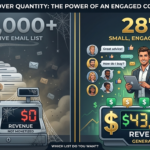

The Retired Teacher Who Doubled Her Price and Tripled Her Sales
Margaret spent 32 years as a high school English teacher in Portland.
After retirement, she decided to offer online writing coaching to help students prepare for college essays.
She created a solid program:
- 4 weeks of training
- Weekly 1-on-1 calls
- Personalized feedback on essays
- Bonus templates and resources
She priced it at $97.
Why? “I’m retired. I don’t need a lot of money. Plus, I’m new to this online thing—I don’t want to scare people away.”
First month results:
- 47 people saw her offer
- 2 people bought
- Revenue: $194
She was devastated. “Maybe I’m just not cut out for this.”
Then she joined a mastermind group where a coach asked her one brutal question:
“If someone came to you in person—a parent willing to pay ANYTHING to get their kid into their dream college—what would you charge?”
Margaret thought about it. “Honestly? At least $500. Maybe even $1,000. The value I’m providing could change their entire future.”
“Then why the hell are you charging $97 online?”
That question changed everything.
Margaret made ONE change: She raised her price from $97 to $297.
Same program. Same content. Same Margaret.
Next month results:
- 52 people saw her offer (similar traffic)
- 7 people bought
- Revenue: $2,079
She tripled her sales by raising her price.
Here’s what she discovered (and what blew her mind):
The people who bought at $297 were BETTER clients:
- They showed up for calls
- They did the work
- They got results
- They left glowing testimonials
- They referred friends
The $97 buyers?
- Constant refund requests
- Ghosted on calls
- Complained about “how hard it is”
- Never left reviews
Margaret’s lesson (and yours):
“The price you charge determines the customer you attract.”
Let me show you exactly how to price your offers so you attract serious buyers—and stop leaving money on the table.
The Brutal Truth About Pricing (That Nobody Tells You)
Here’s the uncomfortable reality:
Most new online entrepreneurs underprice their offers by 300-500%.
Not a typo. They’re charging one-fifth of what they should.
Why?
Three toxic beliefs:
❌ Belief #1: “I’m new, so I can’t charge premium prices.”
The Truth: Your customers don’t care how long you’ve been “in business online.” They care about the RESULT you can deliver.
- A retired accountant with 30 years of experience helping businesses with taxes can charge $297+ for a course on “Tax Strategies for Small Businesses”—even if it’s their FIRST online product.
- A former HR manager with 20 years of experience can charge $497 for “Interview Mastery for Senior Professionals”—even if they’ve never created a course before.
Your expertise isn’t new. Your online business is.
❌ Belief #2: “If I charge too much, nobody will buy.”
The Truth: If you charge too LITTLE, the WRONG people will buy (and make your life hell).
Kevin Fahey’s research proves this:
“The $7 front-end pricing model is too low and puts affiliates off promoting. There is also very little difference between a $7 buyer and a $9.95 buyer.”
Translation: Cheap buyers are cheap buyers. They won’t upgrade. They won’t implement. They’ll just complain.
Premium buyers are action-takers. They invest because they’re serious about getting results.
❌ Belief #3: “I’ll start low and raise my prices later.”
The Truth: This strategy RARELY works.
What actually happens:
- You attract tire-kickers at $27
- You build a reputation as “the cheap option”
- When you try to raise prices to $297, your audience revolts
- “You used to charge $27! This is a ripoff!”
You’ve anchored yourself as the budget brand.
Kevin’s Rule: Start with the price you WANT to charge long-term. You can always run sales or offer discounts—but raising prices after building an audience is painful.
The Psychology of Pricing (Why Higher Prices Actually INCREASE Sales)
This sounds counterintuitive, but it’s backed by decades of research:
Higher prices create higher PERCEIVED VALUE.
Example:
Two identical bottles of wine. Same vineyard. Same year. Same taste.
- Bottle A: $15
- Bottle B: $75
When taste-tested blind, people rated Bottle B as “smoother,” “more complex,” and “higher quality.”
Same wine. Different price. Different perception.
The same psychology applies to your online offers.
When you price at $297 instead of $97, customers assume:
- ✅ This must be higher quality
- ✅ This person is an expert (not a beginner)
- ✅ This will actually get me results
- ✅ I need to take this seriously (since I invested)
When you price at $27, customers assume:
- ❌ This is probably basic/generic info
- ❌ This person doesn’t know what they’re doing
- ❌ This won’t actually work
- ❌ I’ll just buy it and forget about it
The paradox:
Charging MORE increases sales because it increases perceived value and attracts committed buyers.
The “10-20% Rule” for Pricing Your Offers (Kevin Fahey’s Formula)
Here’s the pricing framework Kevin teaches (and it’s brilliant):
“Price your offer at 10-20% of the value it creates.”
Let’s break this down:
Example 1: Resume Writing for Executives
Your course teaches executives how to write a resume that lands $150K+ jobs.
Value created: $150,000/year salary (minimum)
10-20% of value: $15,000 – $30,000
Realistic pricing: $497 – $997 for a course, $2,997 – $5,000 for coaching
Most people would charge: $97
See the gap?

Example 2: LinkedIn Profile Optimization for Consultants
Your service helps consultants optimize their LinkedIn to attract 3-5 high-ticket clients per month at $5,000 each.
Value created: $15,000 – $25,000/month = $180,000 – $300,000/year
10-20% of value: $18,000 – $60,000
Realistic pricing: $997 for a course, $2,997 for a “done-with-you” program, $5,000+ for “done-for-you” service
Most people would charge: $197
Example 3: Freelance Writing Course for Retirees
Your course teaches retirees how to land their first 5 freelance writing clients at $500/article.
Value created: $2,500 in the first month (5 clients x $500)
10-20% of value: $250 – $500
Realistic pricing: $297 – $497
Most people would charge: $47
The Pattern:
People massively undervalue the OUTCOME they’re delivering.
They price based on:
- “How much I think people will pay”
- “What my competitor charges”
- “What I would pay”
All wrong.
Price based on VALUE CREATED.
The Proven Price Points That Work (By Product Type)
Based on Kevin Fahey’s years of data, here are the price points that convert:
📕 Digital Products (Courses, PDFs, Video Training):
- Lead Magnet (Free): $0 (builds your list)
- Tripwire/Low-Ticket: $12.95 – $27 (indoctrination offer)
- Core Course: $47 – $297 (main offer)
- Premium Course: $297 – $997 (comprehensive training)
- Membership Site: $27 – $97/month (recurring revenue)
👨💼 Coaching/Consulting:
- Group Coaching (4-12 weeks): $297 – $997
- 1-on-1 Coaching (3 months): $2,997 – $4,997
- 1-on-1 Coaching (6 months): $4,997 – $9,997
- VIP Day (1 full day): $2,000 – $5,000
- Done-For-You Services: $5,000 – $25,000+
🛠️ Services (Freelancing, Consulting):
- Hourly Rate: $100 – $500/hour (depending on expertise)
- Project-Based: $1,000 – $10,000+ (depends on scope)
- Retainer: $2,000 – $10,000/month (ongoing services)
Kevin’s Insight from 10+ years of launches:
“Information Products: FREE > PDF $12.95 > Video Training $27 > Membership $37 > High Ticket Coaching $1,000 – $10,000”
The key: Build a VALUE LADDER.
Start people with something affordable ($12.95 – $47), then offer higher-ticket options as they see results.
The “3 Pricing Tiers” Strategy (How to Maximize Revenue)
Here’s a pricing hack that consistently boosts sales by 30-40%:
Offer 3 pricing tiers for the same offer.

Example: “LinkedIn Mastery for Retirees”
🥉 Bronze Tier – $197
- Core training videos (7 modules)
- Downloadable templates
- Email support
🥈 Silver Tier – $397 ⭐ MOST POPULAR
- Everything in Bronze
- Weekly group coaching calls (4 weeks)
- LinkedIn profile review
- Bonus: “100 Content Ideas” swipe file
🥇 Gold Tier – $997
- Everything in Silver
- 2 x 1-on-1 coaching calls
- Done-for-you LinkedIn headline and summary
- 30-day unlimited email access
What happens:
- 60-70% buy Silver (the “Goldilocks Effect”—not too cheap, not too expensive)
- 20-25% buy Bronze (budget-conscious buyers)
- 10-15% buy Gold (serious action-takers who want the best)
Average sale: $400 – $450 (vs. $297 if you only offered one option)
The psychology:
People LOVE options. They don’t want to feel like they’re getting the “cheap version,” but they also don’t want to overspend.
The middle tier gives them permission to buy.
The Biggest Pricing Mistakes (And How to Avoid Them)
❌ Mistake #1: Pricing Based on “Hours of Content”
Wrong thinking: “I only have 3 hours of video, so I can’t charge much.”
Reality: Nobody cares about hours. They care about RESULTS.
- A 15-minute video that teaches someone to land a $100K job is worth MORE than a 30-hour course on “general career advice.”
Fix: Price based on outcome, not content volume.
❌ Mistake #2: Competing on Price
Wrong thinking: “My competitor charges $97, so I’ll charge $47 to undercut them.”
Reality: The lowest price attracts the WORST customers.
Fix: Compete on VALUE, not price. Add bonuses, better support, or unique positioning.
❌ Mistake #3: Charging “What You Would Pay”
Wrong thinking: “I would never pay $497 for a course, so I’ll charge $97.”
Reality: YOU are not your customer.
Your customer might be a retiree with $200K in savings who values TIME over money.
Fix: Survey your audience. Ask: “What would you pay to solve [problem]?”
❌ Mistake #4: Apologizing for Your Price
Wrong language:
- “I know this is expensive, but…”
- “It’s only $297 (I know, I know)…”
- “Normally this would be $497, but I’m offering it for just $97…”
Confident language:
- “This is $297 because it delivers $15,000+ in value.”
- “Investment: $497. ROI: Priceless.”
- “The price is $997, and it’s worth every penny.”
Fix: Own your price. If YOU don’t believe it’s worth it, neither will they.
❌ Mistake #5: Never Raising Prices
Wrong thinking: “I’ve been charging $97 for 2 years. My audience expects it.”
Reality: If your offer is delivering results, it’s worth MORE over time (not less).
Fix: Raise prices annually. Grandfather in existing customers. New customers pay the new rate.
The “Value Stack” Presentation (How to Make ANY Price Feel Like a Steal)
Here’s the copywriting trick that makes high prices feel EASY to say yes to:
Break down the value of every component.
Example Sales Page:
“LinkedIn Mastery for Retirees” – What You Get:
✅ 7-Module Video Training ($497 value) ✅ LinkedIn Profile Templates ($97 value) ✅ 4 Weekly Group Coaching Calls ($800 value) ✅ Personal Profile Review ($297 value) ✅ 100 Content Ideas Swipe File ($47 value) ✅ Email Support for 30 Days ($197 value)
Total Value: $1,935
Your Investment Today: $397
You Save: $1,538
See what happened?
By stacking the value of each component, $397 suddenly feels like a NO-BRAINER.
The psychology: People love to feel like they’re getting a deal (even if the “value” is somewhat arbitrary).
How to Test Your Pricing (Without Losing Sales)
Strategy #1: Start High, Offer “Early Bird” Discounts
- Launch at $497
- Offer first 20 buyers a $200 discount ($297)
- After 20 sales, price goes to $397 (mid-tier)
- After 50 sales, price goes to full $497
Why this works:
- Creates urgency (“Get in before the price goes up!”)
- Tests price sensitivity
- Rewards early adopters
Strategy #2: A/B Split Test (If You Have Traffic)
- Send 50% of traffic to $297 offer
- Send 50% of traffic to $497 offer
- Measure conversion rate AND total revenue
Sometimes: Lower price = more sales, but LESS revenue. Often: Higher price = fewer sales, but HIGHER revenue (and better customers).
Strategy #3: Survey Your Audience
Ask: “If I created a course on [topic], what would you expect to pay?”
Offer 4 options:
- $97
- $197
- $397
- $497+
Don’t just go with the lowest answer. Look for the MEDIAN (most people answer $197-$397? Price at $297).
The Bottom Line: Charge What You’re Worth (Not What You’re Scared Of)
Here’s the truth:
Underpricing doesn’t just hurt your bank account—it hurts your business.
When you charge too little:
- ❌ You attract low-quality customers
- ❌ You can’t afford to deliver great service
- ❌ You position yourself as “budget” instead of “premium”
- ❌ You burn out because you need 100 sales to make $2,700 instead of 10 sales
When you charge what you’re worth:
- ✅ You attract serious, committed buyers
- ✅ You can invest in better support and resources
- ✅ You build a sustainable, profitable business
- ✅ You serve fewer people at a higher level (win-win)

Kevin Fahey’s Final Word:
“Know your target market. You can switch pricing around and market to everyone, anywhere, at any price point. But if you’re selling to serious buyers, don’t insult them with bargain-bin pricing.”
Your 40 years of experience is worth more than $27.
Act like it.
Ready to Build a High-Value Offer That Commands Premium Prices?
Download my free “Premium Pricing Calculator”: A simple worksheet that helps you calculate the TRUE value of your offer and confidently set your price.
👉 Get your free Premium Pricing Calculator here →