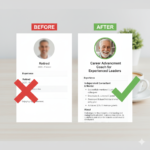

You’ve retired. Someone asks what you do. You freeze. “I’m retired” feels incomplete. “I’m a consultant” sounds vague. Here’s the 30-second answer that opens doors instead of closing them.
The Question That Haunts Every Retired Professional
You’re at a wedding. A golf outing. Your neighbor’s barbecue.
Someone you haven’t seen in a while asks: “So, what are you up to these days?”
Or worse: “What do you do now?”
And you freeze.
If you say “I’m retired,” the conversation dies. They smile politely and move on to someone more interesting.
If you say “I’m a consultant,” they nod blankly. “Oh. Cool.” Then change the subject.
If you ramble about your career history, their eyes glaze over.
There’s a better answer. One that makes people lean in and say, “Tell me more about that.”
I’m going to give it to you today.
Why Your Current Answer Doesn’t Work
Let me show you what most people say—and why it fails:
Answer #1: “I’m retired.”
Translation to them: “I used to matter. Now I play golf.”
Result: Conversation over. They have nothing to ask you about.
Answer #2: “I’m a consultant.”
Translation to them: “I do… something vague… for someone… maybe.”
Result: Polite nod. No follow-up questions. Dead end.
Answer #3: “Well, I spent 30 years in operations management, and now I’m helping companies with process improvement and…”
Translation to them: [Glazed eyes. Already thinking about the buffet table.]
Result: You’ve lost them. Too much information. No hook.
Here’s the problem: None of these answers create curiosity.
And curiosity is what leads to “Tell me more”—which leads to “Do you have a card?”—which leads to clients.

The Formula That Works
Here’s the answer that changes everything:
“You know how [COMMON PROBLEM]? I help [TYPE OF COMPANY] [SOLVE THAT PROBLEM].”
That’s it. Two sentences. 30 seconds.
Let me show you how it works:
My Answer (Before):
“What do you do?”
“I’m retired. Well, I do some consulting. Operations stuff mostly. Process improvement, that kind of thing.”
[They nod. Say nothing. Walk away.]
My Answer (After):
“What do you do?”
“You know how growing companies hit a wall around 50-75 employees where everything starts breaking? I help manufacturing companies scale past that without operational chaos.”
[They lean in.]
“Oh really? My brother-in-law’s company is going through that exact thing right now. Can I connect you two?”
See the difference?
Why This Formula Works
- It Starts With Them, Not You
“You know how…” immediately makes them think about the problem.
They either:
- Know someone dealing with this
- Have dealt with this themselves
- Get curious about what “that” looks like
You’ve created relevance in 5 words.
- It’s Specific Enough to Be Memorable
When they hear “consultant,” they forget you in 30 seconds.
When they hear “the person who helps companies scale without chaos,” they remember you.
Specific sticks. Vague vanishes.
- It Invites Questions
Generic answers close conversations.
“I’m retired.” [Nothing to ask about.]
But: “I help companies scale without chaos.”
They want to know:
- “What kind of chaos?”
- “How do you do that?”
- “What’s the biggest mistake companies make?”
You’ve opened a door instead of closing one.

Real Examples From Real People
Let me show you how this works across different fields:
Financial Services Background:
Before: “I used to be a CFO. Now I consult.”
After: “You know how growing companies run out of cash even when they’re profitable? I help them fix their cash flow before it becomes a crisis.”
HR Background:
Before: “I spent 25 years in HR. I do some coaching now.”
After: “You know how companies lose their best people right after a merger? I help them keep key talent during transitions.”
IT Background:
Before: “I’m retired from IT. I do some technology consulting.”
After: “You know how companies buy expensive software and then nobody uses it? I help them actually implement systems that people adopt.”
Sales Background:
Before: “I was VP of Sales. I’m doing some advisory work.”
After: “You know how sales teams lose deals at the proposal stage? I help them fix their closing process.”
See the pattern?
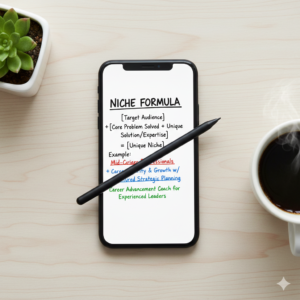
Problem they recognize → Specific outcome you deliver → Instant relevance.
How to Create Your Answer
Step 1: Identify the Problem
What problem does your niche solve? (You defined this yesterday.)
Make it relatable. Something they’ve seen or heard about.
Examples:
- “You know how companies hit chaos around 50 employees…”
- “You know how mergers destroy company culture…”
- “You know how new managers struggle with difficult conversations…”
Step 2: Name Your People
Who do you help? Be specific but not too narrow.
Good: “manufacturing companies,” “tech startups,” “family businesses”
Too vague: “businesses,” “companies,” “organizations”
Too narrow: “Series B SaaS companies in the Pacific Northwest”
Step 3: State the Outcome
What do you help them achieve or avoid?
Good: “scale without chaos,” “keep key talent,” “close more deals”
Vague: “do better,” “improve operations,” “be more successful”
Step 4: Combine and Test
Put it together:
“You know how [PROBLEM]? I help [WHO] [OUTCOME].”
Say it out loud. Does it sound natural? Would you actually say this at a barbecue?
If it feels stiff or corporate, simplify it.
Common Mistakes to Avoid
Mistake #1: Too Much Jargon
Bad: “I leverage synergistic operational frameworks to optimize cross-functional efficiency.”
Good: “I help companies get their departments talking to each other.”
Use words normal humans use.
Mistake #2: Too Long
Bad: “Well, I spent 30 years in operations, and I specialize in process improvement, change management, and organizational development, particularly in the manufacturing sector, though I’ve also worked with…”
[They’re gone. You lost them at “well.”]
Good: Two sentences. 30 seconds max.
Mistake #3: No Problem Hook
Bad: “I help companies with their operations.”
[Okay… so what? Why do they care?]
Good: “You know how growing companies hit a wall where everything breaks? I help them scale past that.”
[Now they care. They’ve seen that wall.]

What Happens Next
Once you nail this answer, here’s what changes:
✅ Conversations don’t die when you mention retirement
✅ People ask follow-up questions (“How do you do that?”)
✅ You get introduced to people who need you (“You should meet my friend…”)
✅ You sound confident, not apologetic (no more “I’m just retired”)
✅ Referrals happen naturally (“I know exactly who you need to talk to”)
This isn’t a sales pitch. It’s a conversation starter that actually starts conversations.
Your Assignment
Write your answer using the formula:
“You know how [PROBLEM]? I help [WHO] [OUTCOME].”
Say it out loud. Record yourself on your phone.
Does it sound natural? Like something you’d actually say?
If not, simplify it. Remove jargon. Make it conversational.
Then test it. Use it three times this week in actual conversations.
See what happens. I bet at least one person says, “Tell me more about that.”
Talk Tomorrow
Tomorrow, we’re diving into LinkedIn—how to transform your profile from “retired” to “in-demand consultant” in about 60 minutes.
Hit reply and send me your answer. I want to see what you came up with. I’ll tell you if it’s clear or if it needs tweaking.
— Bob
P.S. The first time I used this answer at a networking event, three people asked for my card. One became a $12,000 client. All from changing 30 seconds of conversation. Words matter.